Case Study: Supply Chain Planning at Grolsch Brewery
In this project, you are part of a consulting team assigned to assist Grolsch Brewery, a historic Dutch company, in overcoming a series of business challenges. Your role involves investigating a specific challenge within the company’s supply chain and operations, developing innovative solutions, and presenting actionable recommendations to Grolsch’s board of directors. The objective is to help Grolsch optimize its decision-making processes, enhance operational efficiency, and improve efficiency, and adapt to evolving industry trends, securing its competitive market position.
Company Introduction
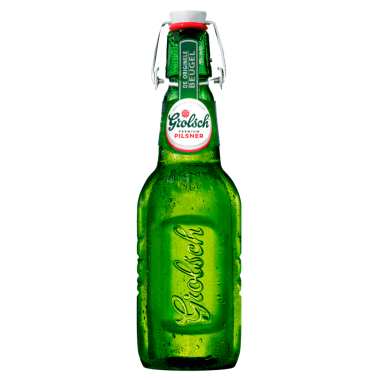
Grolsch, officially known as Koninklijke Grolsch N.V., is a historic Dutch brewery founded in 1615 in Groenlo. The name “Grolsch” is derived from the old name of the town, Grolle. Over the centuries, Grolsch has evolved from a local brewery into an internationally recognized beer brand, known for its high-quality pilsner and iconic swing-top bottle (see Figure 1).
As a subsidiary of Asahi Breweries, Ltd., since 2016, Grolsch operates its state-of-the-art brewery and headquarters in Enschede. The company produces a diverse range of beers, including seasonal and limited-edition varieties, and exports its products globally.
In the dynamic Dutch beer market, Grolsch currently holds the third position in terms of market distribution within bars, cafés, and restaurants, capturing about 9% of the market share. This market presence is particularly strong in the Overijssel province, where Grolsch commands a significant 38.2% of the market distribution1.
Context Analysis
Overview of Major Activities in Grolsch’s Supply Chain
Understanding Grolsch’s supply chain requires a clear visualization of the sequence of activities from raw material procurement to the delivery of finished products. Below is a high-level overview of these critical activities:
Raw Material Procurement: Grolsch sources essential ingredients such as hops, malt, yeast, and water, which are crucial for producing its various beer varieties. The company maintains strong relationships with suppliers to ensure consistent quality and availability of these materials. Effective procurement is essential for aligning supply with production schedules and maintaining the high standards Grolsch is known for.
Production Process: The brewing process at Grolsch’s Enschede facility involves several stages, including mashing, fermenting, conditioning, and packaging. Production planning plays a pivotal role here, as it must align with demand forecasts and consider the availability of raw materials. The process culminates in the production of beer in various formats, including bottles, cans, and kegs.
Inventory and Warehouse Management: Inventory management at Grolsch is concerned with both raw materials and finished products. Efficient management of these inventories ensures that the production process runs smoothly and that finished products are available to meet customer demand. Warehousing operations, involve managing stock levels, optimizing space utilization, and fulfilling orders. The integration between warehouse management and inventory control is critical for maintaining production flow and meeting delivery schedules.
Distribution and Logistics: Once production is complete, the finished products are stored and prepared for distribution. Grolsch’s distribution network includes both domestic and international channels, delivering products to retailers, bars, restaurants, and direct consumers. Logistics management is crucial in ensuring that products are delivered on time and in good condition, thus maintaining customer satisfaction and brand reputation.
Reverse Supply Chain: Grolsch operates a reverse supply chain to manage the return of reusable packaging materials, such as kegs and Flip Top bottles. These containers are essential for maintaining production cycles and reducing operational costs. The reverse supply chain involves collecting, processing, and reintegrating these containers into the production process, ensuring a steady supply of packaging materials.
Information Systems
To support these activities, Grolsch relies on a range of information systems and technologies that enhance operational efficiency and decision-making, including:
Enterprise Resource Planning (ERP) System: Grolsch’s ERP system integrates key business processes such as production planning, inventory management, and procurement. It allows for real-time data sharing across departments, ensuring that production schedules align with inventory levels and demand forecasts. This centralized platform enhances decision-making and operational efficiency.
SAP Warehouse Management System (WMS): The SAP WMS is critical for optimizing Grolsch’s warehousing operations. It manages order picking, batch processing, and wave management, ensuring accuracy in orders and maximizing space utilization. The WMS also integrates with automated material handling systems, enhancing operational efficiency and reducing costs.
Demand Forecasting Tools: Grolsch leverages sophisticated demand forecasting tools that use historical sales data and market trends to predict future demand. These tools are essential for aligning production schedules with market needs, reducing the risk of stockouts or overproduction. Predictive analytics are used to anticipate demand fluctuations, allowing for more accurate and responsive production planning.
Emerging Trends in the Brewing Industry
The brewing industry is undergoing significant transformations driven by various global and consumer trends. These trends are essential for breweries to recognize and adapt to, ensuring they remain competitive and responsive to market demands:
Sustainability and Circular Economy Initiatives: Environmental responsibility is becoming a cornerstone for breweries worldwide. This includes efforts to reduce water and energy consumption, minimize waste, and promote recycling and reuse, particularly in packaging. Breweries are increasingly implementing circular economy practices, such as using returnable packaging and ensuring that every step of their supply chain, from raw material sourcing to distribution, aligns with sustainable principles.
Digital Transformation and Smart Brewing: The integration of digital technologies is revolutionizing brewing operations. Breweries are adopting IoT for real-time process monitoring, AI for optimizing production and predictive maintenance, and blockchain for ensuring transparency and traceability across the supply chain. These innovations are enhancing efficiency, quality control, and supply chain management, making brewing processes more responsive and adaptive to market changes.
Shifting Consumer Preferences and the Rise of Craft Beer: There is a growing consumer interest in craft beers and specialty brews, which is pushing breweries to expand their product portfolios. This trend emphasizes the importance of innovation in product development, allowing breweries to cater to niche markets with unique, high-quality offerings. Flexibility in production processes is becoming crucial to meet the demands for small-batch production and varied flavor profiles.
Supply Chain Resilience and Risk Management: Recent global events have highlighted the need for robust and flexible supply chains. Breweries are focusing on developing resilient supply chain models by diversifying suppliers, enhancing logistics, and implementing advanced risk management strategies. These measures are vital for mitigating the impact of disruptions and ensuring continuity in operations.
Innovations in Warehousing and Inventory Management: Modern warehousing and inventory management are increasingly driven by automation and data analytics. Breweries are adopting advanced technologies like robotics, AI, and IoT to streamline warehouse operations, optimize inventory levels, and improve order fulfillment accuracy. These innovations help breweries maintain efficient operations and meet the fast-paced demands of the market.
Challenges
Grolsch faces several key challenges across its supply chain that require innovative solutions. These challenges are presented as focus areas where students can choose to concentrate their efforts, with each area offering opportunities for exploration and improvement.
Challenge 1: Quality Management
Description and Motivation:
Maintaining the high quality of Grolsch’s products is essential for preserving its reputation. The company must carefully manage the brewing process to avoid defects in the beer or packaging. For example, a batch of beer that does not meet quality standards may need to be blocked, requiring adjustments to the production schedule. These adjustments can disrupt the supply chain, impacting delivery schedules and customer satisfaction. Therefore, it is crucial to balance quality assurance measures with production efficiency.
Focus Areas:
- Managing Blocked Products: Develop strategies for deciding which products should be prioritized if a batch is blocked due to quality issues, ensuring minimal disruption to the supply chain.
- Balancing Quality Assurance and Production Efficiency: Investigate methods for conducting thorough quality checks without unnecessarily delaying production.
- Minimizing Customer Impact: Propose contingency plans (or workarounds) that maintain customer satisfaction even when quality issues occur.
Potential Questions to Answer:
- What should be produced next if a batch is blocked due to quality issues?
- How can Grolsch ensure that quality control processes do not excessively delay production?
- What contingency plans can be implemented to maintain supply levels when quality issues arise?
Potential Outputs:
- A flexible production schedule that accommodates sudden changes due to quality control issues.
- A contingency plan for managing blocked products and maintaining customer service levels.
Potential KPIs:
- Customer service levels.
- Time taken to replan production after a quality issue.
- Rate of on-time deliveries despite quality challenges.
Potential Inputs:
- Historical Quality Data: Records of past quality issues, their causes, and resolutions.
- Real-Time Quality Monitoring Data: Sensors and automated quality checks to identify defects early in the production process.
- Production Schedules: Current and projected production plans for the next four weeks.
- Inventory Levels: Available stock of SKUs to determine what can be produced immediately.
- Customer Orders and Delivery Schedules: Prioritization data based on critical customers and delivery deadlines.
- Supplier Information: Availability of raw materials needed for alternative production.
- Cost Data: Cost implications of delaying production versus reallocating resources to other products.
Challenge 2: Inventory Management
Description and Motivation:
Grolsch must manage its inventory effectively, balancing the storage of raw materials and finished products within limited warehouse capacity. Fluctuating availability of materials like cans and bottles, combined with continuous production, complicates this task. For example, if a key material is delayed, Grolsch must adjust its production schedule to prevent stockouts. Conversely, overproduction can lead to excess inventory, increasing storage costs and the risk of waste. Efficient inventory management is crucial for maintaining production schedules and meeting customer demand.
Focus Areas:
- Warehouse Capacity Optimization: Explore methods to ensure that inventory levels do not exceed warehouse capacity, particularly during peak production periods, and manage space effectively while dealing with continuous production.
- Adjusting for Material Availability: Develop strategies to adapt production schedules based on the availability of critical materials, preventing production disruptions.
- Improving Inventory Turnover: Propose ways to maximize inventory turnover while maintaining sufficient safety stock levels to meet demand.
Potential Questions to Answer:
- How can weekly production schedules be adjusted to reflect changes in material availability and warehouse capacity?
- What strategies can be implemented to optimize warehouse space utilization during peak seasons?
- How can inventory turnover be maximized without risking stockouts or excess inventory?
Potential Outputs:
- A dynamic inventory management plan that adjusts weekly to reflect current constraints and demand forecasts.
- An optimized warehouse capacity utilization strategy that minimizes the need for external storage.
Potential KPIs:
- Inventory turnover rate.
- Percentage of warehouse capacity utilized.
- Number of stockouts or excess inventory incidents.
- Cost of external storage or waste due to overproduction.
- Customer satisfaction levels based on product availability.
Potential Inputs:
- Inventory Levels: Real-time data on current stock levels, including safety stock and available warehouse space.
- Warehouse Capacity Data: Detailed mapping of warehouse utilization and available storage space.
- Material Availability Forecasts: Weekly updates on the availability of critical materials like cans and bottles.
- Production Schedules: Planned production output for the coming weeks, aligned with inventory targets.
- Demand Forecasts: Predicted sales data to align inventory levels with expected demand.
- Supplier Lead Times: Information on the lead times for replenishing key materials.
- Cost Data: Costs associated with external storage, stockouts, and overproduction.
Challenge 3: Production Strategies (Make-to-Order vs. Make-to-Forecast)
Description and Motivation:
Grolsch currently balances between producing beer in advance based on forecasts (make-to-forecast) and producing it to meet specific orders (make-to-order). Each strategy has its advantages and disadvantages, particularly when considering the effects of weather on beer consumption. For example, producing based on forecasts allows Grolsch to meet anticipated demand during peak seasons (e.g., summer months) but it risks overproduction if demand falls short. Conversely, producing to order minimizes inventory but may lead to stockouts during unexpected demand spikes. Hence, Grolsch must optimize its production strategy to mitigate these risks effectively.
Focus Areas:
- Understanding Demand Fluctuations: Explore how changes in weather or market conditions impact demand, and decide when to switch between production strategies.
- Prioritizing Customers and Regions: When production capacity is limited, determine which customers or regions should be prioritized.
- Managing Production Risks: Analyze the risks associated with overproduction or stockouts and develop strategies to mitigate these risks.
Potential Questions to Answer:
- When should Grolsch switch from a make-to-forecast to a make-to-order strategy, and vice versa?
- How should production be adjusted to account for sudden weather changes that impact beer demand?
- Which customers or regions should be prioritized if production capacity is limited?
Potential Outputs:
- A flexible production strategy that effectively balances the risks and benefits of make-to-order (MTO) and make-to-forecast (MTF) approaches.
- A customer prioritization framework that guides decision-making during limited production scenarios.
Potential KPIs:
- Forecast accuracy during high-demand periods.
- Customer satisfaction levels during peak seasons.
- Production cost efficiency.
- Inventory turnover rate.
Potential Inputs:
- Weather Forecast Data: Short-term and long-term weather predictions that could impact beer consumption.
- Historical Sales Data: Trends related to seasonal sales fluctuations and the impact of weather on demand.
- Customer Order Data: Real-time orders and historical purchasing patterns of key customers.
- Production Capacity Data: Information on the current and projected capacity of production lines.
- Supply Chain Lead Times: Data on the time required to switch production strategies or prioritize certain orders.
- Financial Impact Analysis: Cost-benefit analysis of switching between make-to-order and make-to-forecast strategies.
- Market Analysis: Insights into customer behavior and preferences during different seasons or weather conditions.
Challenge 4: Reverse Supply Chain
Description and Motivation:
Managing the return of containers—the reusable packaging materials used by Grolsch such as kegs and Flip Top bottles—is a critical component of Grolsch’s operations, essential for maintaining continuous production cycles and controlling operational costs. These reusable packaging materials are fundamental to Grolsch’s sustainability initiatives and cost-efficiency strategies. However, the brewery faces challenges in ensuring a consistent and timely return of these containers, particularly when relying on customer returns from bars and restaurants. The variability in return rates, coupled with the logistical complexities of collecting and processing these containers, can lead to production disruptions and increased costs if not managed effectively. On the other hand, purchasing additional packaging materials as a backup can be costly and may not align with Grolsch’s sustainability goals. The reverse supply chain process must be optimized to ensure that returns are handled efficiently and that packaging is swiftly reintegrated into the production cycle, minimizing any potential impact on operations.
Focus Areas:
- Improving Return Rates: Develop strategies to increase the return rate of kegs and Flip Top bottles, ensuring a steady supply for production.
- Cost Management: Evaluate the cost-effectiveness of purchasing additional packaging versus relying on returns.
- Optimizing Reverse Logistics: Enhance the reverse logistics process to minimize delays and ensure that returned packaging is quickly reintegrated into the production cycle.
Potential Questions to Answer:
- How can the return rate of kegs and Flip Top bottles be improved to ensure a steady supply?
- What are the costs and benefits of purchasing additional kegs and bottles versus relying on returns?
- How can the reverse supply chain process be optimized to ensure a steady supply of necessary packaging?
Potential Outputs:
- An optimized reverse supply chain process with improved return rates.
- A cost-benefit analysis of purchasing additional kegs and bottles.
- A strategy for managing returns and minimizing the impact on production schedules.
Potential KPIs:
- Return rate of containers.
- Cost efficiency in reverse logistics.
- Turnaround time for returned containers.
Potential Inputs:
- Current Return Rates: Detailed data on return rates segmented by customer type, geography, and time period.
- Inventory Levels of Returnable Packaging: Information on the availability and condition of returned containers ready for reuse.
- Customer Return Policies and Incentives: Analysis of existing return policies and potential new incentives for improving return rates.
- Cost Data: Comprehensive cost data related to purchasing new containers versus the costs associated with reverse logistics.
- Logistics and Transportation Data: Insights into the efficiency and bottlenecks within the reverse logistics process, including transportation times, processing delays, and handling inefficiencies.
- Technology Integration Options: Evaluation of potential technologies (e.g., RFID, GPS) that could enhance the tracking and management of returnable containers.
References
- Galama, N. (2024). Cost Optimization for Rejected Kegs at the Keg Line at Grolsch. University of Twente. Available from https://essay.utwente.nl/102950/1/Galama_MA_BMS.pdf
- Grolsch aims for zero waste and takes concrete steps forward. (n.d.). Royal Grolsch. Retrieved August 22, 2024, from https://www.royalgrolsch.com/content/grolsch-aims-zero-waste-and-takes-concrete-steps-forward
- Grolsch case analysis. (n.d.). SlideShare. Retrieved August 22, 2024, from https://www.slideshare.net/slideshow/grolsch-case-analysis-team-3-final6262014/49910980#19
- Kamp, N. (2018). Warehouse design and operation for efficient supply chain management in the beer industry (Master’s thesis). University of Twente. Available from https://essay.utwente.nl/74736/1/Kamp_MA_BMS.pdf
- Our story - Grolsch Brewery. (n.d.). Grolsch Beer. Retrieved August 22, 2024, from https://www.grolsch.com/our-story
- Pijnappel, B. T. A. (2016). Optimalisatie van de tactische productieplanning van Grolsch (Bachelor’s thesis). University of Twente. Available from https://essay.utwente.nl/70849/1/Pijnappel_BA_BMS.pdf
- Roos, D. (2023). Optimizing the distribution network of Grolsch: A study on logistics efficiency (Master’s thesis). University of Twente. Available from https://essay.utwente.nl/96930/
- Spanninga, R. M. (2021). Supply chain optimization in the Dutch brewery sector: A case study on returnable packaging at Grolsch (Master’s thesis). University of Twente. Available from https://essay.utwente.nl/86192/
- Sjoerd van Willigen - Supply Chain Planner. (n.d.). Royal Grolsch. Retrieved August 22, 2024, from https://www.royalgrolsch.com/node/1418
- Grolsch Brewery. (n.d.). In Wikipedia. Retrieved August 22, 2024, from https://en.wikipedia.org/wiki/Grolsch_Brewery